
Leaving the corporate world to work for a major medical non-profit changes your entire perspective on what a “hard day at work” actually means. Instead of worrying about company profit margins, your daily focus shifts to actual survival rates in rural clinics. This is exactly why securing one of the open Right to Care Vacancies is such a massive goal for local healthcare professionals.
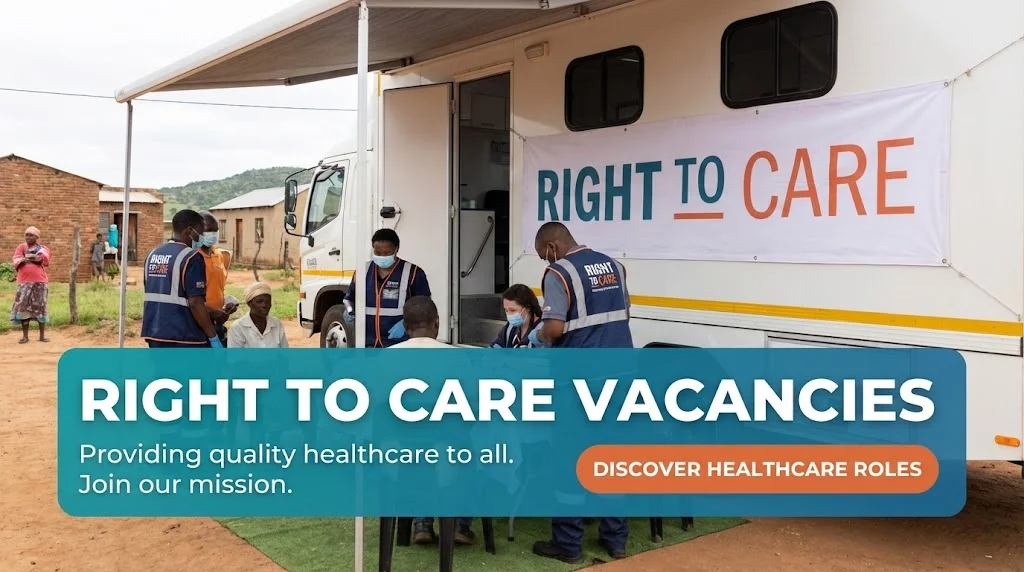
This organization is a heavy hitter in the public health space. They partner directly with the government to fight massive battles against HIV and TB, often stepping in where state clinics lack the necessary resources. Their footprint is huge, stretching from mobile testing tents in remote villages to high-tech automated pharmacy lockers in busy townships.
Because they operate on massive international donor grants like PEPFAR or USAID their hiring cycles are intense. When a new multi-million Rand grant gets approved, their recruitment teams go into overdrive. They suddenly need dozens of NIMART-trained nurses for field testing, sharp data capturers to log patient viral loads into national systems, and careful logistics drivers to transport sensitive medication coolers.
The financial side is surprisingly stable for an NGO environment. As long as the specific donor project is active, staff receive highly competitive basic wages, proper medical aid cover, and essential travel allowances for the heavy mileage they put on their cars.
You don’t even need to be wearing a stethoscope to get on their payroll. Keeping an operation this large compliant with strict international donor rules requires a dedicated backend army of IT specialists, community mobilizers, and supply chain coordinators.
We have put together a clear picture of what the field teams and office staff actually earn on these grants. We will also highlight which public health jobs in South Africa are currently open, along with a realistic guide on how to get your compliance documents seen by the right project manager.
Our Honest Take: Working at Right to Care
Our Analysis: Working for a major health NGO is incredibly rewarding but can be emotionally and physically draining. A lot of the real work happens far away from comfortable city offices. If you are a field worker or a mobile nurse, you will spend hours driving on terrible dirt roads to reach vulnerable communities. You also have to understand the reality of “Grant Funding.” Many employment contracts here are tied to specific 2 or 3-year donor cycles. However, having an organization of this caliber on your resume instantly makes you a top candidate for any future public health roles globally.
Expert Pro Tip: “The Donor Compliance Keyword.” NGOs live and die by their funding audits. If you are applying for an admin, finance, or data capturing role, make sure to highlight your strict attention to detail. Using phrases like “strong understanding of donor compliance, data integrity, and strict reporting standards” shows the recruiters that you understand how international NGO funding actually works.
Job Overview: Salary & Benefits (2026 Estimates)
| Role | Est. Monthly Salary (ZAR) | Category |
| Medical Officer / Doctor | R60,000 – R85,000 | Clinical |
| Professional Nurse (NIMART) | R25,000 – R38,000 | Nursing Staff |
| Post-Basic Pharmacy Assistant | R14,000 – R21,000 | Allied Health |
| M&E Data Capturer | R12,000 – R18,000 | Administration |
| Supply Chain Driver | R10,000 – R14,000 | Logistics |
| Community Health Worker | R6,500 – R9,500 | Field Support |
Available Job Positions (2026 Breakdown)
Fighting infectious diseases across a whole country requires a highly diverse set of skills. The open positions advertised by this NGO usually fall into three main functional areas:
1. Frontline Clinical & Testing
- Roles: Professional Nurses, Phlebotomists, Medical Officers, HIV Testers.
- The Job: Delivering direct patient care. You will administer ARVs to chronic patients, draw blood samples in mobile testing tents, or initiate NIMART protocols for newly diagnosed individuals.
- Requirements: A relevant Degree or Diploma in Nursing or Medicine. Active registration with the SANC or HPCSA is strictly non-negotiable.
2. Monitoring, Evaluation (M&E) & Data
- Roles: Data Capturers, M&E Officers, IT Support Technicians.
- The Job: Tracking the epidemic. You will capture thousands of patient files into the government TIER.Net system, generate weekly reports for international donors, or fix the digital tablets used by field workers.
- Requirements: Strong computer literacy and typing speed for clerks. An IT or Statistics degree is required for senior M&E roles.
3. Pharmacy Operations & Logistics
- Roles: Pharmacist Assistants, Fleet Drivers, Warehouse Packers.
- The Job: Moving the medicine. You will pack chronic medication parcels into the automated Pelebox smart lockers, drive heavy 4×4 vehicles to deliver supplies to rural clinics, or manage stock rotations in the central medical warehouse.
- Requirements: Pharmacy staff need SAPC registration. Drivers must hold a valid Code 10 license with a clean PrDP and defensive driving experience.
The Reality of NGO Health Work
- The Emotional Toll:
You will be working with deeply vulnerable populations. Seeing the devastating effects of poverty, TB, and advanced HIV on a daily basis is tough. You need a strong mental framework to do this work without burning out.
- Constant Travel:
If you take a field-based role, your car becomes your office. You will be expected to travel extensively between different district hospitals, rural clinics, and community halls, often staying in guesthouses for days at a time.
- Strict Data Accuracy:
In the NGO world, if it wasn’t recorded, it didn’t happen. Every single patient interaction, blood test, and dispensed pill must be accurately logged. Donors will pull funding if they find out data is being fabricated or handled sloppily.
Featured “Hot Job”: M&E Data Capturer
Right to Care is urgently seeking a highly meticulous Monitoring and Evaluation (M&E) Data Capturer to support our public health programs. You will be responsible for accurately digitizing patient records, maintaining data integrity across national health systems, and ensuring strict compliance with international donor reporting standards.
- Estimated Salary: R12,000 – R18,000 per month (depending on the grant budget).
- Location: Centurion Headquarters / Various District Clinics.
Requirements:
- A Grade 12 (Matric) certificate; a certificate in Basic Computer Literacy or Data Management is a big plus.
- Minimum of 1 to 2 years experience capturing data in a clinical or NGO setting.
- Extensive hands-on experience using the Department of Health’s TIER.Net software.
- High typing accuracy and a proven ability to spot errors in physical patient files before digitizing them.
How to Apply Correctly? (The 3 Real Strategies)
Unlike private companies, major non-profits are audited heavily by international funders like USAID and the Global Fund. Every single hire has to be perfectly documented. Because of this, you cannot just forward your resume to a random info email. You have to understand how their grant cycles work:
- The Central Compliance Gate (For Professional Roles)
If you are a NIMART-trained nurse, a pharmacist, or an IT specialist, you have to play strictly by the book. All formal, grant-funded positions are pushed through the Official Right to Care Portal. Because they answer to global donors, their digital application forms demand extreme detail. A major insider tip for the NGO space: always attach a strong motivation letter. While corporate recruiters usually ignore cover letters, public health hiring managers actively look for candidates who express a genuine, personal passion for community upliftment.
- District-Level Direct Submissions (For Field Staff)
If your goal is to work as a lay counselor, a mobile clinic driver, or a community linkage officer, sitting behind a computer isn’t always the smartest move. Grassroots projects heavily prioritize hiring people who actually live in the targeted district (like Ehlanzeni or Thabo Mofutsanyana) because they need staff who understand the local culture and dialect. Find out where the regional project office or mobile testing unit is stationed in your town. Walking in to introduce yourself to the local Site Manager with your CV and a stamped proof of residence proves you are a local who is ready to deploy immediately.
- The Donor-Funded Headhunting Network (For Specialists)
Finding an epidemiologist or a senior finance manager who understands how to manage multi-million dollar international grants is incredibly hard. For top-tier executive and specialized medical roles, the internal talent team constantly scans LinkedIn. If your profile clearly lists acronyms that NGO recruiters desperately look for like PEPFAR, DOH reporting, or TIER.Net experience—you are very likely to get a private message from a headhunter before a senior position even hits the public job boards.

Thabo Mandla is the lead Career Guide Expert at DurbanTalent.com. With over 10 years of practical experience in South African recruitment, he specializes in connecting professionals with top employers in Aviation, Finance, and Hospitality. Thabo combines his background in Human Resources with direct insights from local hiring managers to provide job seekers with accurate, actionable, and reliable career advice. He is passionate about helping candidates navigate the Durban job market and achieve their professional goals.