
Leaving a permanent government post to join a non-profit might seem like a big change, but for many medical professionals, it is exactly what they need. If your goal is to work on the ground and help stop diseases before they spread, checking the newest HST Vacancies is a move you won’t regret.
Health Systems Trust (HST) isn’t a private hospital; it is a massive NGO that works hand-in-hand with the national Department of Health. Their main mission is to fix the gaps in the public health system, especially when it comes to the HIV and TB crises in South Africa.
Because they manage large grants from international donors, they are always looking for new staff to join their field teams. On any given week, they might be hiring pharmacy assistants for rural clinics, counselors for youth testing programs, or data managers to keep track of patient statistics.
NGO work is slightly different from the public sector. You will likely sign a fixed-term contract that lasts as long as the project’s funding. However, the pay is usually very competitive, and you won’t have to deal with the chaotic, unpredictable hours of a public hospital emergency room.
If you are ready to trade the hospital wards for community field work, we have put together a realistic guide on the earning potential at this organization. We also look at the specific NGO jobs in South Africa they are trying to fill this month and the best ways to get your resume onto the hiring manager’s desk.
Our Honest Take: Working for HST
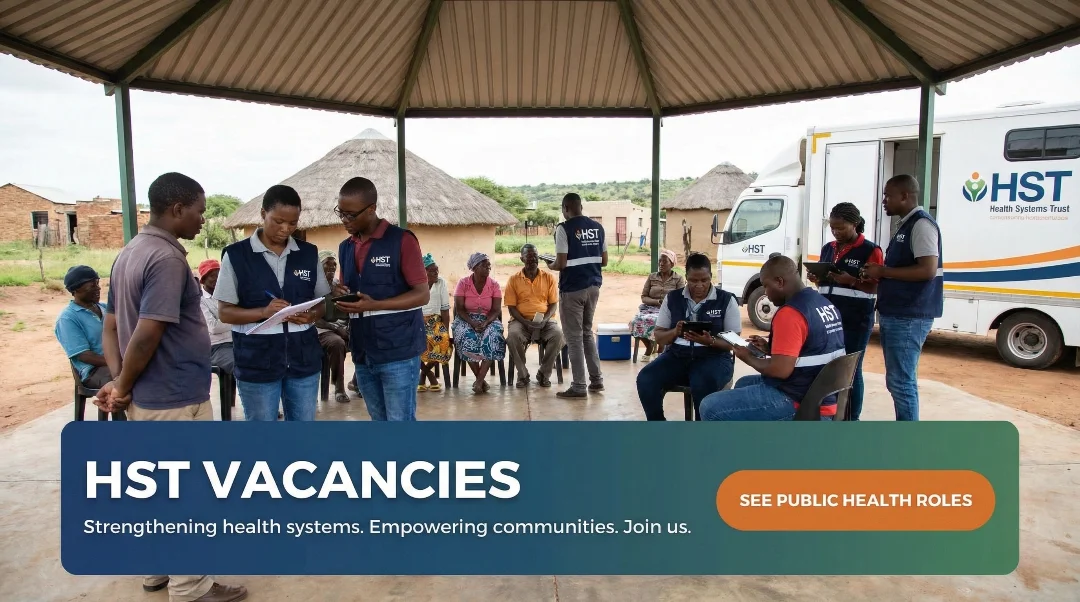
Our Analysis: Working for Health Systems Trust puts you right at the grassroots level of South African healthcare. You will spend most of your time in rural or township clinics, sharing space with government staff but reporting to your NGO managers. The culture is highly target-driven. Your primary goal is to link patients to care and keep them on their medication. It requires immense patience and empathy, but the organization is known for treating its employees well, providing excellent on-the-job training and solid fleet vehicles for field travel.
Expert Pro Tip: “The TIER.Net Keyword.” In the NGO space, data is basically currency. Even if you are applying for a clinical role like a Nurse or a Pharmacy Assistant, you need to show you understand health informatics. Specifically mentioning your hands-on experience with TIER.Net or WebDHIS (the national health databases) on your CV will give you a massive advantage over candidates who only have clinical skills.
Job Overview: Salary & Benefits (2026 Estimates)
| Role | Est. Monthly Salary (ZAR) | Category |
| Clinical Advisor / Doctor | R60,000 – R85,000 | Medical |
| Professional Nurse (NIMART) | R32,000 – R48,000 | Clinical Care |
| M&E / Data Coordinator | R25,000 – R36,000 | Administration |
| Pharmacy Assistant (PB) | R18,000 – R24,000 | Allied Health |
| Linkage to Care Officer | R14,000 – R20,000 | Outreach |
| Data Capturer | R10,000 – R15,000 | Clerical |
Available Job Positions (2026 Breakdown)
Health Systems Trust divides its workforce into specialized units to hit their donor targets efficiently. The roles they advertise generally fall into these three branches:
1. Clinical Care & Pharmacy
- Roles: NIMART Nurses, Post-Basic Pharmacy Assistants, Clinical Mentors.
- The Job: Delivering frontline care. You will initiate newly diagnosed patients onto ARVs, manage the stock levels of chronic tuberculosis medication at local clinics, and provide clinical mentorship to junior government nurses.
- Requirements: Registration with SANC (for nurses) or SAPC (for pharmacy staff) is completely non-negotiable.
2. Monitoring and Evaluation (M&E)
- Roles: Data Capturers, M&E Officers, Health Informatics Specialists.
- The Job: Capturing the impact. You will take physical patient folders from the clinic and accurately enter that data into the national electronic register so the international donors can see exactly where their money is going.
- Requirements: Exceptional typing accuracy, a Matric certificate, and an IT or data administration qualification.
3. Community Outreach & Linkage
- Roles: Lay Counselors, Community Health Workers, Linkage Officers.
- The Job: Closing the gap. You will conduct rapid HIV tests in community halls, trace patients who have stopped taking their chronic medication, and physically help them navigate the clinic system to get back on track.
- Requirements: A valid driver’s license for traveling between deep rural households and a strong command of the local community languages.
The Reality of NGO Public Health Work
- The “Linkage to Care” Pressure:
Your job isn’t just to test someone for an illness; you are responsible for making sure they actually start their treatment. NGOs operate on strict “cascade” targets. If a patient tests positive but walks out without their medication, it counts as a failure on your monthly performance review.
- Operating in Shared Spaces:
HST employees do not usually have their own massive private hospitals. You will be placed inside existing Department of Health clinics. This means you have to build strong, respectful relationships with the government facility managers, as you are essentially a guest working in their space.
- Fixed-Term Realities:
You have to be comfortable with contract work. If HST wins a massive five-year project in Zululand, your employment is guaranteed for those five years. As the contract nears its end, you will need to actively apply for newer projects within the organization to maintain your income.
Featured “Hot Job”: Pharmacy Assistant (Post-Basic)
Health Systems Trust (HST) is seeking a qualified Post-Basic Pharmacy Assistant to support our clinical teams in the delivery of comprehensive primary healthcare. You will be responsible for managing medication stock levels, dispensing chronic HIV and TB treatments under the supervision of a pharmacist, and educating patients on treatment adherence.
- Estimated Salary: R18,000 – R24,000 per month (depending on the grant budget).
- Location: Various districts (eThekwini, uMgungundlovu, Zululand).
Requirements:
- A valid Grade 12 (Matric) certificate.
- A formally recognized Post-Basic Pharmacist Assistant qualification.
- Active, paid-up registration with the South African Pharmacy Council (SAPC).
- Proven experience with drug stock management, dispensing, and reading clinical prescriptions.
- Strong communication skills to explain medication dosages to rural patients.
How to Apply Correctly? (The 3 Application Channels)
Health Systems Trust is a highly organized NGO, so they don’t do things the old-fashioned way. You cannot just hand a paper CV to a clinic manager. To get onto their shortlist, you have to use their specific digital and networking channels. Here are the three actual ways you can submit your application:
Step 1: The Official HST Recruitment Portal
The most reliable way to apply is directly through the Health Systems Trust Vacancies Page. Because they manage projects for international donors, they use an automated system to track applicants. You have to create a secure login, manually enter your certificates, and upload your CV as a clean document. A huge tip here: always copy the exact “Reference Number” from the job ad into your application. If that number is missing, their computer system might literally lose your file in the database.
Step 2: External Job Boards (PNet & LinkedIn)
When a massive new grant is awarded, HST often needs to hire 50 or 100 people at once. To find talent quickly, they post their official adverts on PNet and LinkedIn. If you apply through these sites, make sure your digital profile is 100% complete. Their recruiters use filters to find people with specific skills, so ensure keywords like “HIV/TB management,” “NIMART,” or “M&E” are listed clearly in your skills section.
Step 3: Industry Networking and Stakeholder Meetings
The public health NGO world is actually quite small. Many people get hired through “word of mouth” because field managers prefer someone who has already proven they can handle rural work. If you are already working in the sector, attending regional Department of Health meetings is a great way to meet HST managers. Being a known, reliable worker in your district often leads to being recruited directly when a new project opens up in your area.

Thabo Mandla is the lead Career Guide Expert at DurbanTalent.com. With over 10 years of practical experience in South African recruitment, he specializes in connecting professionals with top employers in Aviation, Finance, and Hospitality. Thabo combines his background in Human Resources with direct insights from local hiring managers to provide job seekers with accurate, actionable, and reliable career advice. He is passionate about helping candidates navigate the Durban job market and achieve their professional goals.