
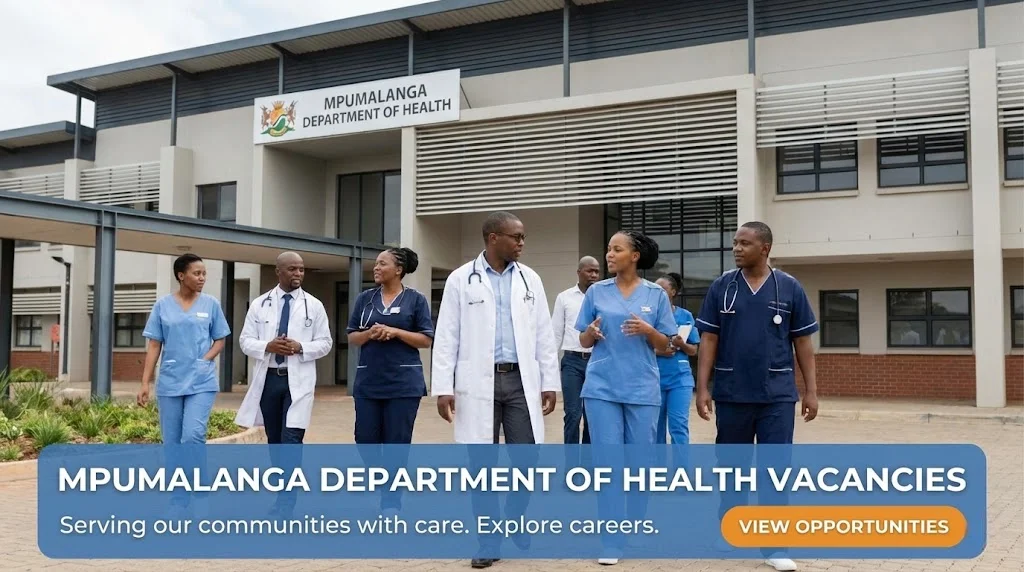
People staying in Mpumalanga who want to work in the medical field do not need to travel to Gauteng for great jobs Looking at the latest Mpumalanga Department of Health Vacancies is the best way to find a steady job near where you live
The provincial health team has a huge responsibility. They run the busy state hospitals in places like Witbank and Nelspruit, but they also keep the doors open at dozens of tiny clinics in the deep rural areas of the Lowveld.
Because most locals rely entirely on these state facilities, the HR department never stops hiring. On any given week, they might be looking for trauma nurses for the emergency rooms, ambulance drivers to cover the N4 highway, or basic payroll clerks to sit in the main office.
A government contract takes the stress out of your finances. You know exactly when your paycheck will clear, your family gets access to a state-subsidized medical scheme, and you automatically start paying into a reliable retirement fund.
Whether you are looking for healthcare jobs in Nelspruit or prefer a quieter life working at a small district clinic in Bushbuckridge, there are always options available.
Let’s look at the actual salaries you can expect, the exact roles they are trying to fill this month, and how to submit your paperwork without the government system automatically rejecting you.
Our Verdict: Working for Mpumalanga Health
Our Analysis: The reality of working in Mpumalanga’s public hospitals is that resources are often stretched very thin. You will regularly deal with staff shortages, broken equipment, and frustrated patients. It takes a resilient person to thrive here. However, because it is a largely rural province, the clinical exposure is incredible. You will manage complex trauma and infectious diseases that you would rarely see in a private Sandton clinic. Furthermore, if you take a rural posting, the financial bonuses added to your basic salary are significant.
Expert Pro Tip: The Paid Up Proof Phrase State office workers will skip your resume if they believe your medical license is not active. If you apply as a Nurse, Paramedic, or Radiographer, clearly state your HPCSA or SANC number on your CV. Add a bold line that says “Yearly professional dues must be fully settled with a status that remains operational for the current calendar cycle.” It immediately proves you are legally ready to work.
Job Overview: Salary & Benefits (2026 Estimates)
| Job Title | Approximate Monthly Pay in ZAR | Department Type |
| Senior Medical Doctor Grade One | R70,000 to R85,000 | Medical Experts |
| Qualified Specialist Nurse | R35,000 to R50,000 | Nursing Division |
| Advanced Life Support Paramedic | R28,000 to R40,000 | Rescue Workers |
| Pharmacy Help Staff | R18,000 to R24,000 | Medical Support Roles |
| Medical Office Clerk | R15,000 to R20,000 | Administrative Help |
| Facility Porter or Cleaning Staff | R9,000 to R12,000 | Basic Labor |
Available Job Positions (2026 Breakdown)
The local health office is a very large organization that handles many tasks beyond caring for patients. Their employment listings generally fit into these three operational categories.
1. Clinical & Specialized Nursing Care
- Positions: Registered Nurses, Midwives, General Practitioners, and Radiographers.
- The Work: Giving direct medical help. You might help women give birth in small country clinics take pictures of broken bones for crash victims or handle urgent operations at the main hospital in Witbank.
- Necessities: You must possess an accredited medical degree or diploma. Maintaining an active, paid-up practicing certificate with the HPCSA or SANC is a non-negotiable legal requirement.
2. Urgent Rescue and Ambulance Services
- Positions:Emergency Care Practitioners (Paramedics), Rescue Technicians, and Dispatch Center Operators.
- The Work: Working as fast as possible. You will steer rescue vehicles to major accidents on the N4 road help keep very hurt patients stable or pick up emergency phone calls at the main dispatch station.
- Necessities: Formal HPCSA enrollment as an emergency worker is mandatory. Personnel behind the wheel of rescue units must hold a valid Code C1 license paired with a current Professional Driving Permit (PrDP).
3. Facility Help and Office Work
- Positions: Admissions Clerks, Procurement Officers, Hospital Porters, and Hygiene Staff.
- The Work: Making sure the hospital buildings stay running. You will move patients in chairs to the xray room buy large amounts of medical tools using the government network or sort through patient folders at the front desk.
- Necessities: General support and portering roles require physical stamina and a Grade 10 or Matric. Financial and administrative posts demand a National Senior Certificate, often paired with a diploma in Public Management.
What Working in Regional Medical Care is Really Like
- One Dealing With Many Sick People:
Government clinics are usually completely full all the time When you are placed in a state urgent care ward you will see bad road collision injuries mine site accidents and severe physical harm every single day It requires a very tough mental attitude to handle this stress.
- The Money Benefits of Country Towns
Landing a permanent post at Nelspruit’s Rob Ferreira Hospital is notoriously difficult due to extreme competition. However, if you are prepared to serve in remote agricultural hubs like Bushbuckridge or Piet Retief, your chances of being hired increase dramatically. To encourage this, the provincial government pays specialized rural incentives to medical professionals who take on roles in these far-flung districts.
- The Very Slow Office Rules:
Since you are employed by the state completing simple tasks can take a very long time When your floor requires fresh sleeping cots you are not allowed to just purchase them You must complete large order papers gather many approval names and hold on until the main headquarters says yes to the spending
Featured “Hot Job”: Professional Nurse – Midwifery
The Mpumalanga Department of Health is urgently seeking a highly skilled Specialty Professional Nurse to join our busy provincial maternity units. You will be responsible for managing antenatal care, delivering babies safely in high-pressure environments, and providing postnatal care to mothers in rural and urban district hospitals.
- Predicted Monthly Pay: R35,000 – R50,000 (DPSA regulated notch) plus commuted overtime and specialized rural incentives for agricultural district placements.
- Location: Various District Hospitals (e.g., Witbank, Tonga, Shongwe).
What You Need:
- Hold an accredited Degree or Diploma in General Nursing and Midwifery.
- Possess a recognized post-basic qualification specializing in Advanced Midwifery and Neonatal Nursing Science.
- Verified standing as a Professional Nurse with the South African Nursing Council (SANC), including a current practicing certificate.
- At least four years of recognizable experience in clinical nursing after your initial registration.
- The resilience to manage an obstetric ward independently during night shifts at isolated health posts.
How to Apply Correctly? (The 3 Real Hurdles)
The Mpumalanga HR staff are known for being ruthless with incomplete files. You cannot just drop off a typed CV at your local clinic. The provincial government relies on a strict, manual paper trail. Here you must follow this specific protocol to secure an interview:
Step 1: Getting the Paperwork Right
To apply for any medical or hospital support job, you must submit the state’s official paperwork. Download the latest version of the Z83 Government Application Form. Print the pages and fill them out completely. Do not skip any lines. If a specific section does not match your profile, write “N/A” so the HR clerks know you did not simply forget to answer. Submitting an old format or forgetting your signature at the end will ruin your chances.
Step 2: Getting Your Copies Certified
You cannot just staple normal photocopies of your ID and nursing diplomas to your CV. You have to take your original documents to a South African Police Service (SAPS) station and get the copies officially stamped. A major trap here is the date on that stamp. The hiring managers in Nelspruit will usually reject your file if the police signature is older than six months. Always get fresh stamps right before a big application.
Step 3: The Final Background Check
Even if the hospital manager loves your interview, the state still has to clear you before giving you a contract. They will run your fingerprints to check for a criminal past, but more importantly, they will verify your professional standing. The department talks straight to the South African Police Service (SAPS) or HPCSA to confirm your practicing card is valid, your yearly fees are up to date, and your clinical record is completely clean.

Thabo Mandla is the lead Career Guide Expert at DurbanTalent.com. With over 10 years of practical experience in South African recruitment, he specializes in connecting professionals with top employers in Aviation, Finance, and Hospitality. Thabo combines his background in Human Resources with direct insights from local hiring managers to provide job seekers with accurate, actionable, and reliable career advice. He is passionate about helping candidates navigate the Durban job market and achieve their professional goals.